
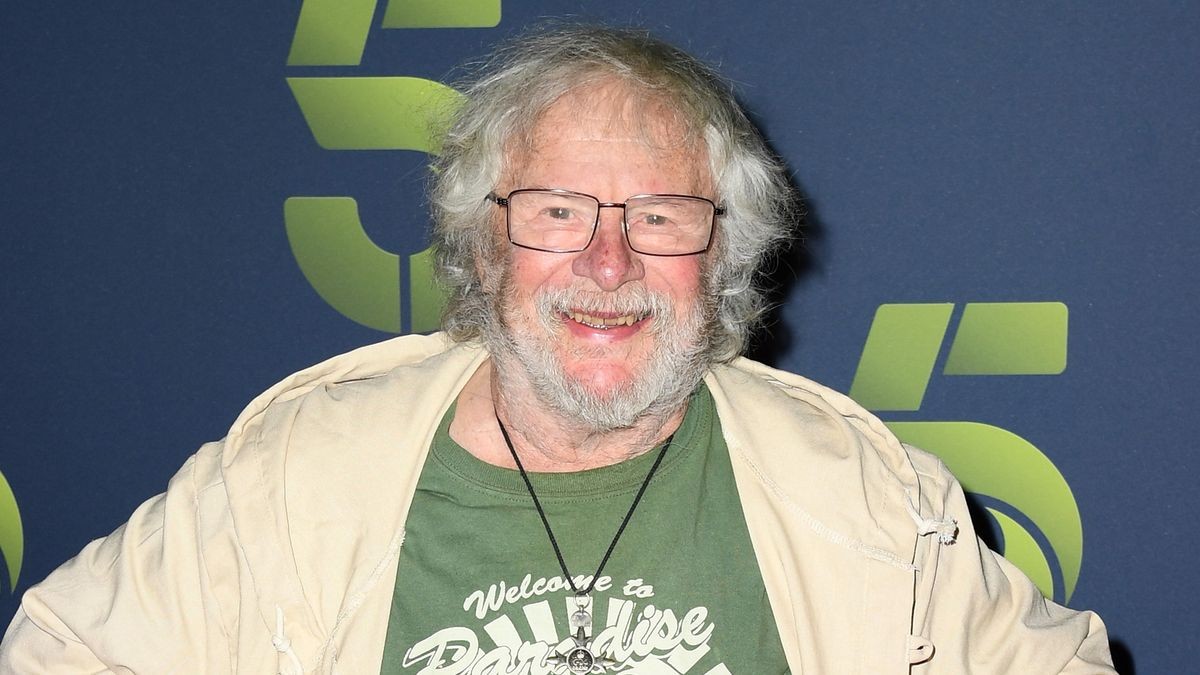
British comedian, songwriter and wildlife broadcaster Bill Oddie has died at the age of 85, his agent has confirmed. The Goodies co-creator, who became a household name across Australia through decades of ABC re-runs, passed away on Saturday 26 July.
Oddie’s death was announced on Monday by his friend and agent David Foster, who described him as “the country’s best-loved birder.”
“Bill was a multi-talented celebrity,” Foster said. “Wildlife presenter, broadcaster, comedian, writer, songwriter, musician and conservationist. Yet it was never fame that he valued. Instead he encouraged us to respect and protect the environment.”
Oddie is survived by his wife Laura Beaumont and three daughters: Kate, Bonnie and Rosie. The family has asked not to be contacted.
How Did Oddie Rise From the Cambridge Stage to British Television?
William Edgar Oddie was born on 7 July 1941 in Rochdale, Lancashire. His early years were marked by upheaval. His mother Lilian was sectioned in a psychiatric hospital when he was six years old, following a violent episode linked to deteriorating mental health. Oddie was raised in Quinton, Birmingham, by his father Harry, an accountant, and his grandmother Emily.
He attended King Edward’s School in Birmingham before winning a scholarship to Pembroke College, Cambridge, where he read English. It was at Cambridge that Oddie joined the university’s celebrated Footlights comedy troupe, performing alongside future collaborators Tim Brooke-Taylor and Graeme Garden, as well as future Monty Python members John Cleese and Graham Chapman.
Oddie wrote the musical numbers for the 1963 Edinburgh Festival revue A Clump of Plinths, which transferred to London’s West End under the title Cambridge Circus and later ran on Broadway. That success led to the BBC Radio sketch show I’m Sorry I’ll Read That Again, which aired from 1964 to 1973. He also wrote material for David Frost’s satirical television programme That Was the Week That Was while still an undergraduate.
By his mid-twenties, Oddie had established himself as a fixture in British broadcasting.
What Made The Goodies a Cultural Force in Australia?
In 1970, Oddie, Brooke-Taylor and Garden pitched a new show to the BBC. The Goodies ran for 76 episodes across nine series, blending slapstick, political satire and surreal visual comedy. The trio co-wrote and performed every episode, with Oddie also composing the show’s music, including novelty singles such as “The Funky Gibbon,” which reached number four on the UK charts in 1975.
The programme attracted millions of viewers during its initial run but was never repeated by the BBC domestically, a decision that frustrated all three performers for years.
In Australia, the reception was entirely different.
The ABC broadcast The Goodies repeatedly throughout the 1970s and 1980s, typically in the 6pm children’s timeslot on weeknights. Each state had its own copies of the episodes, and each ran them on slightly different schedules. The show developed an enduring popularity that outlasted its British broadcast life by decades.
Australian fans staged a 30th anniversary convention in Melbourne in 2000, which Brooke-Taylor attended in person. The event’s success led directly to the first-ever Goodies live show, held not in Britain but in Sydney, at the Big Laugh Comedy Festival in March 2005. The trio performed 13 sold-out dates across Sydney, Parramatta, Melbourne, Canberra and Brisbane.
A second Australian tour followed later that year, covering 17 cities. Brooke-Taylor and Garden returned in person, with Oddie contributing via pre-recorded video segments due to BBC filming commitments in Britain.
The show’s Australian following was, by all accounts, stronger and more sustained than anything it had achieved at home.
How Did Oddie Reinvent Himself as a Wildlife Broadcaster?
Oddie had been an avid birdwatcher since childhood, spending hours at Bartley Reservoir in Birmingham as a teenager. In 1976, he was involved in the successful identification of Britain’s first-ever recorded Pallas’s reed bunting on Fair Isle, Shetland. His ornithological credentials were longstanding and well-documented.
His television wildlife career began with a guest appearance on Animal Magic in 1977 and gathered pace through the late 1990s with BBC series including Birding with Bill Oddie and Bill Oddie Goes Wild. In 2004, his programme Britain Goes Wild set a BBC2 ratings record of 3.4 million viewers. The show was subsequently renamed Springwatch, with Oddie as its inaugural presenter alongside Kate Humble.
Springwatch became one of the BBC’s most-watched factual programmes. Oddie’s presenting style was notably unscripted and spontaneous, drawing on the same improvisational instincts that had driven his comedy career.
He also held positions on the councils of the RSPB, the Wildfowl and Wetlands Trust and the Worldwide Fund for Nature, and served as president of the Northumberland Wildlife Trust.
What Led to His Departure From Springwatch?
Oddie left Springwatch in early 2009 in circumstances he later described as involuntary. He was told the BBC would not be asking him to return. A producer reportedly informed him that colleagues found him “abrasive.”
In a 2017 interview with the Daily Mail, Oddie reflected on the decision. “If I knew then what I know now, I’d have accepted that I was going through a manic phase,” he said.
The aftermath was devastating. Oddie was hospitalised twice in 2009 and was formally diagnosed with bipolar disorder. He had previously been diagnosed with clinical depression in 2001, but the events surrounding his departure from Springwatch triggered a severe deterioration.
In a 2015 interview with The Guardian, Oddie spoke about the impact on his family. He described his wife Laura as a pillar of support through repeated crises and said he was “immensely sad that large chunks of her life have been taken over by my bipolar illness.”
He was eventually stabilised on lithium, a treatment he credited with bringing him back within a fortnight. He continued to take the medication for the remainder of his life.
Oddie became an outspoken advocate for mental health awareness, campaigning for Bipolar UK and the charity Mind. He was among the earliest public figures in Britain to speak openly about bipolar disorder and clinical depression, at a time when doing so carried significant professional and personal risk.
What Are Those Closest to Him Saying?
Chris Packham, the naturalist who succeeded Oddie as Springwatch host, described him as “a renegade polymath with binoculars and a beard” who was “invariably funny and occasionally furious.”
“He loved birds and loathed those who harmed them,” Packham wrote on social media. “He was delightfully unpredictable, sparky, smart and at times a bit spiky. Critically, he really knew his stuff, and his passion was true. He didn’t just pick up his binoculars on telly, he went birding whenever he could.”
Packham concluded: “Sadly we’ve not only lost a Goodie, but we’ve also lost one of the besties.”
Kate Humble, Oddie’s former Springwatch co-presenter, said he was among the earliest public figures to speak candidly about mental health, adding that he remained unmatched in his ability to make her laugh.
Foster, his agent, said he had witnessed Oddie’s “intelligence and wit” at close hand for many years. “He was my friend and it was an honour and a privilege to represent him for so many years. I will miss him terribly.”
What Does His Death Mean for Australian Fans?
Oddie’s connection to Australia was not a footnote in his career. It was, in many respects, a lifeline for the legacy of The Goodies itself.
While the BBC declined to repeat the show, the ABC kept it in rotation for nearly two decades. Australian audiences provided the sustained viewership and vocal fan community that eventually prompted the trio to reunite for live performances in 2005. Those Australian shows were the first Goodies live performances ever staged.
Actor and birdwatcher Samuel West said Oddie’s improvised, unscripted narration on Birding with Bill Oddie represented an ideal form of natural history broadcasting and had shaped an entire generation’s appreciation for wildlife.
Oddie’s fellow Goodie Tim Brooke-Taylor died of COVID-19 complications in April 2020, aged 79. Graeme Garden, now 83, is the sole surviving member of the trio.
The Full Measure of a Life
Bill Oddie’s career spanned comedy, music, television, conservation and mental health advocacy. He wrote hit singles. He identified rare birds. He built a comedy show that became a generational touchstone across two hemispheres. He survived a childhood fractured by mental illness, and then confronted the same illness in himself with a public honesty that few of his contemporaries could match.
“He taught us the wonder of it,” Foster said in his statement. “He protested, lobbied and campaigned for it. He led the way, and people of all ages and backgrounds responded to his call.”
Bill Oddie was 85.